 trimoji
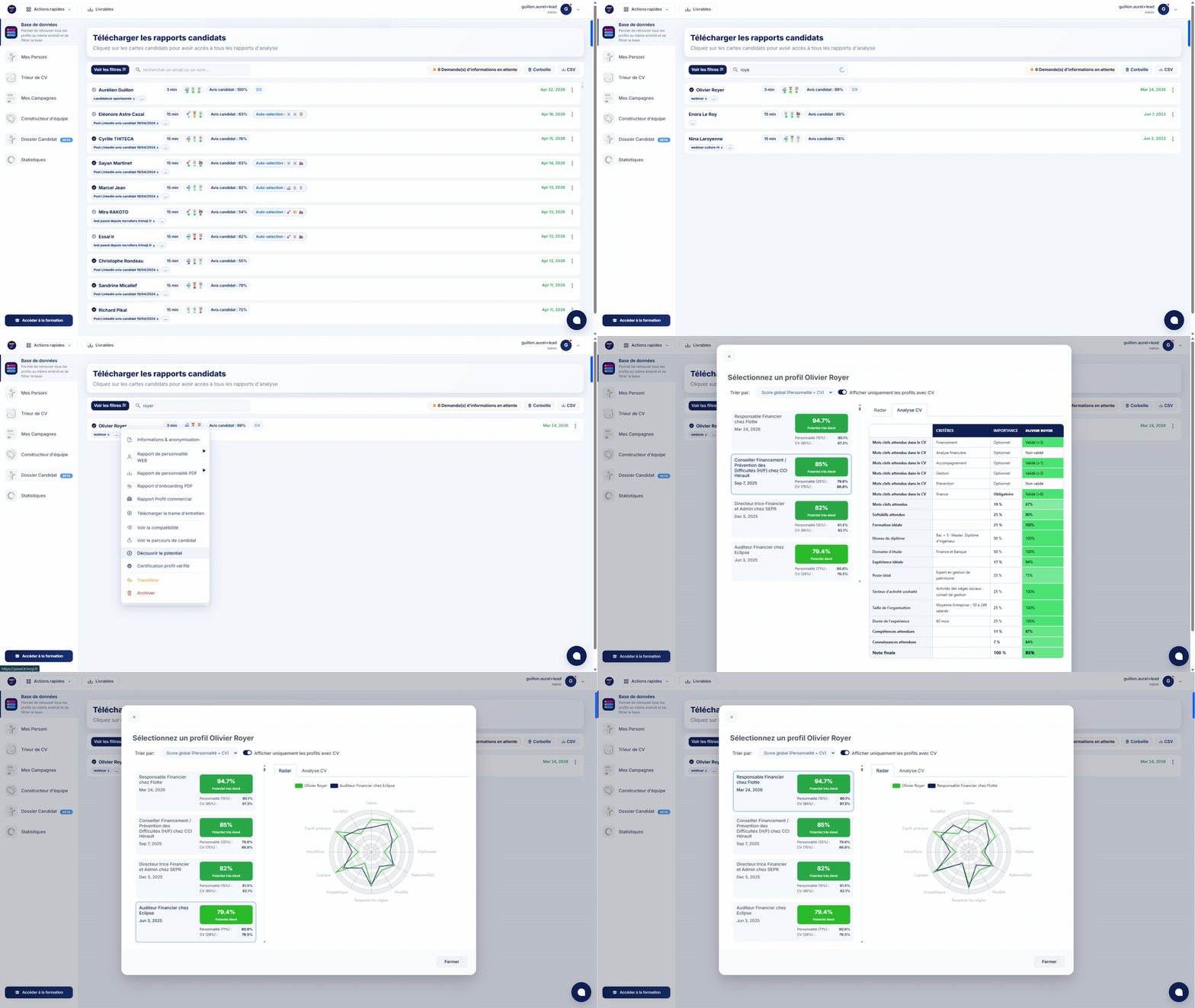
 Discover potential
Presentation
What is this feature for?
"Discover potential" goes beyond the CV and job titles to identify what can contribute to a profile's success in a given context.
The goal is to make elements such as strengths, areas for development, and performance conditions more readable, to help recruiters, managers, or consultants make decisions and provide effective support.
This feature offers a framework for interpretation and actionable insights to prepare discussions, structure feedback, and build a relevant support plan.
Do you want to better understand what a profile can succeed at, and under what conditions?
Request a Trimoji demoConcrete benefits
What you get concretely
- A structured reading of a profile's strengths and levers.
- Useful points of attention during interviews or onboarding.
- Hypotheses about success factors related to the position and environment.
- Actionable elements for support and coaching, not just selection.
Added value
Why "Discover potential" is useful
Better identify evolving profiles
Beyond past experience, the feature helps identify what can enable a candidate to succeed in a role, especially in a context of skill development.
Better secure a new role
By highlighting areas of attention and environmental needs, you reduce post-hire surprises and prepare for more effective onboarding.
Better structure support
For consultancies, HR departments, or managers, "Discover potential" provides a clear basis for discussing development, progression, and action plans.
Better objectify without overpromising
Potential is not an absolute truth. The tool helps formulate benchmarks and questions, then validate these hypotheses in interviews, by checking references and in work situations.
How it works
How it works
Step 1: Start with a need or context
You rely on the position, the expected level, the contextual constraints, and possibly a target profile if you use one.
Step 2: Analyze the profile
Trimoji consolidates the available information about the candidate to produce a structured reading focused on potential, with actionable elements.
Step 3: Interpret and question
You use the output as a support for interviews and discussions, with concrete verification points.
Step 4: Decide and support
You translate the insights into actions. For example, points to confirm before a decision, the integration plan, managerial support, progression goals.
Applications
Frequent use cases
Recruiting for atypical profiles
When the background doesn't fit perfectly, but the progression logic is credible, "Discover potential" helps structure the analysis and questions.
Young graduates and first jobs
Less experience data, more need for benchmarks on learning, adaptation, and success in a given environment.
Internal mobility and career progression
Identify the conditions for success in a role change and build a realistic support plan.
Consulting and coaching
Transform an assessment into concrete recommendations that are useful for the client and actionable for the candidate.
Frequently asked questions
FAQ
Does "Discover potential" replace the interview?
No. The feature is used to prepare and structure the conversation, not to make the decision for the recruiter.
Is potential a single score?
The logic is rather to provide a structured reading and actionable benchmarks. If an indicator exists according to your configuration, it must always be interpreted in context.
When should I use it in the process?
Ideally after an initial profile review, to guide the interview, refine the shortlist, or prepare for onboarding.
Is it useful after hiring?
Yes. Elements related to success factors and points of attention can be used for onboarding and follow-up.
Do you want to better understand what a profile can succeed at, and under what conditions?
Request a Trimoji demo